

Claimboost helps Australian policyholders with disputed insurance claim declines. We examine why your insurer rejected the claim, identify gaps in the evidence and explain the next steps. If we take on your claim, we deal with the insurer on your behalf.
Start with a free review of the written decision and the information you have.
Home and contents · Strata · Landlord · Motor · Business
The insurer has rejected your claim or accepted only part of it. You want to understand whether the reasons stand up.
The decision relies on a report with incorrect facts, missing information or conclusions that do not match the evidence.
The insurer has relied on a policy exclusion, but you question how it applies to the loss you claimed.
Send the decline letter and a short claim summary. We can identify what needs a closer look and whether we may be able to help.
You have received the decision, but the explanation does not match your understanding of the loss. The insurer may have rejected everything, or accepted one part while declining another.
We start by separating three things: what you claimed, what the insurer decided and why. Then we compare that decision with the policy and the records available. This establishes the actual dispute before further correspondence or a complaint.
Common reasons we review include:
A review may support the insurer’s decision or identify a reason to question it. We explain which issues matter and whether further advocacy appears worthwhile.
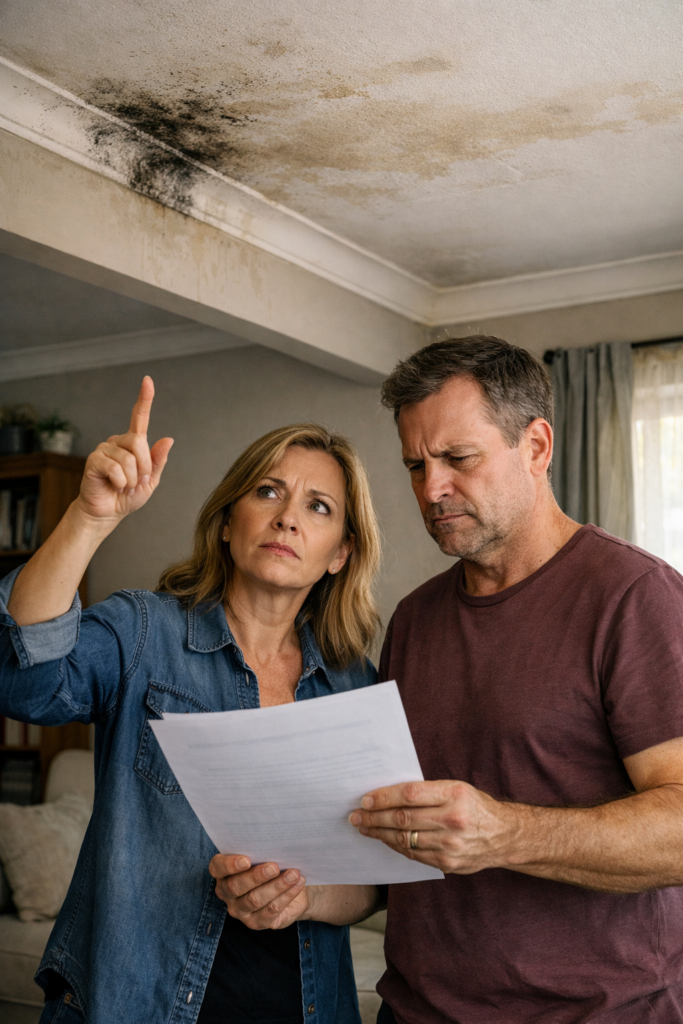
Identify the loss, the insurer’s reason and the evidence behind it.
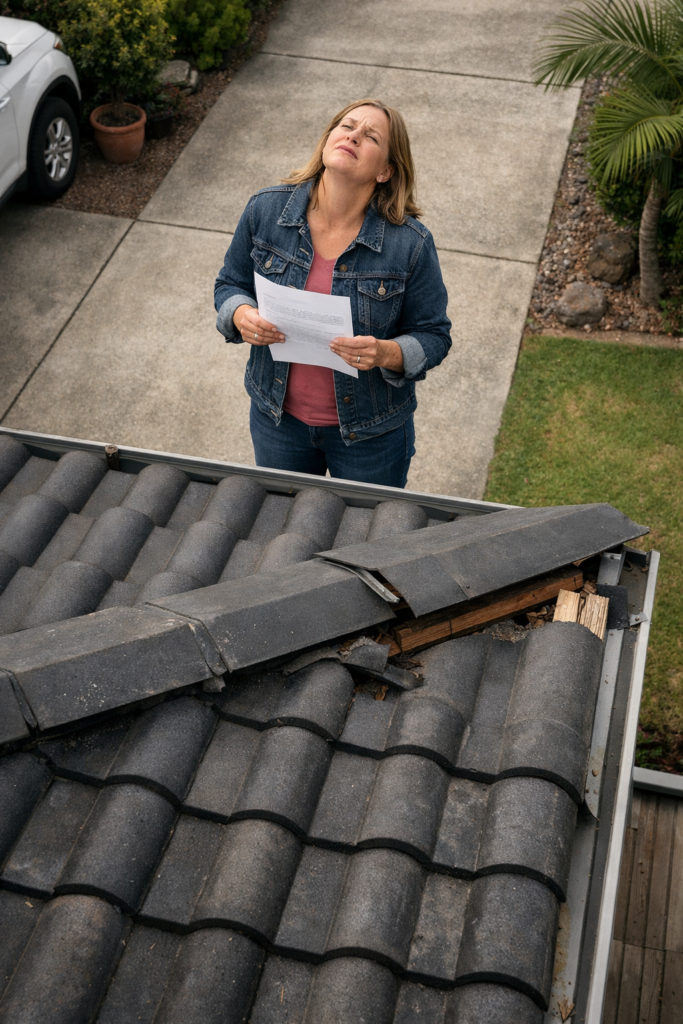
Check the observations, testing and documents behind the conclusion.
A builder, assessor, engineer, investigator or other specialist may have supplied the report behind your decline. We check both the findings and how the insurer has used them.
An error matters when it affects the decision. For example, if a report says damage existed before the event, dated photographs may help test that finding. If the report describes a possible cause, we check whether the decline letter presents it as a confirmed cause.
Issues worth examining include:
We turn the relevant issues into specific questions and corrections. Where the documents cannot resolve a technical point, we identify what further investigation may be useful. A qualified specialist provides that evidence; Claimboost reviews its relevance to the dispute.
An exclusion in the policy does not, by itself, explain why your particular loss has been declined. The wording, circumstances and evidence need to be considered together.
We examine the clause the insurer has relied on and how it connects that clause to the facts. For example, a report may identify a maintenance issue without clearly explaining its connection to all the damage being claimed.
Our review considers:
For a partial decline, we also check whether the insurer has explained why the exclusion affects one part of the loss but not another. The aim is to identify the precise point requiring an answer.
Review the clause alongside the circumstances of the claim.
Send the decline letter and tell us what the insurer has missed or misunderstood. We will explain whether there appears to be a reason to pursue the dispute and what information would help us assess it.
We are best suited to disputes with a written decision and a specific concern about the policy reasoning or evidence. These are examples of issues worth identifying in your enquiry.
The insurer describes the loss as old or gradual, but dated photographs, invoices or other records raise questions about that explanation.
The report gets the event, location, inspection details or claim history wrong, and those errors may affect its conclusion.
You provided relevant documents or an independent report, but the decline letter does not explain how that information was considered.
Some loss has been accepted and some declined, without a clear explanation of the distinction or the evidence supporting it.
The insurer has given different explanations during the claim, and the written decision does not resolve the inconsistencies.
The first review helps us understand your claim and whether we may be able to assist.
Give us the claim date, insurer, current decision and the point you dispute. Include the outcome you are seeking and any complaint already made.
Send the decline letter and the documents that help explain your concern. We can identify what else is needed before a more detailed assessment.
We explain the main issue, whether further evidence is needed and whether the claim suits our service. If we do not see a useful role for Claimboost, we will tell you.
If we offer advocacy, we explain the proposed work and fees before you engage us. The free review carries no obligation to proceed.
For claims we accept, we organise the evidence and put the disputed issues to the insurer with your authority.
A decline letter that leaves you unsure what was rejected.
A report says the damage predates the event, but you have dated photographs.
A maintenance or wear-and-tear explanation that seems incomplete.
A policy exclusion quoted without a clear explanation.
An independent report reached a different conclusion and received no clear response.
Repeating the claim history to different people.
Replies that do not answer your questions.
Uncertainty about whether to pursue the dispute.
We start with a free initial review. Further work depends on suitability and the scope of our engagement.
An initial look at the decision, your concerns and the available information to establish whether Claimboost may be able to assist.
A review of what the insurer has rejected, the reasons provided and the policy clauses or conditions relied on.
With your authority, we examine available correspondence, reports and decision history to understand how the insurer reached its position.
We identify material inconsistencies, missing information and findings that may require clarification or further technical evidence.
For accepted engagements, we present the disputed issues and supporting documents to the insurer and seek a response to specific questions.
Where appropriate, we prepare the issues, evidence and requested outcome for the insurer’s internal dispute resolution process or an AFCA complaint.
Claimboost provides insurance claims advocacy by phone and online. We assist with suitable declined general insurance claims across Australia, including:
You can access the initial review from a capital city, regional centre or remote location. Suitability depends on the claim history, available evidence and whether we believe our involvement can add value.

Ask for the decision in writing, the policy wording relied on and the reports supporting it. Keep your own photographs, invoices and correspondence. Write down the points you disagree with and match each point to the evidence you have. You can then request a review by the insurer, use its complaint process or seek help presenting the dispute.
A useful way to explain your concern: “The decision says [finding]. The attached [document and date] shows [relevant fact]. Please explain how this was considered and review [the disputed part of the decision].”
You can ask the insurer to review its decision and make a complaint through its internal dispute resolution process. This is often what people mean by appealing a decline. If the dispute remains unresolved, AFCA may be an option, subject to its rules and time limits. A review does not guarantee the decision will change.
Send what you have from the following:
Point out the document or finding you want checked. You do not need every item before contacting us.
Yes. For example, an insurer may accept water damage in one area but reject damage elsewhere, or accept a building claim while declining certain contents. We check the reasons for the distinction. A partial decline concerns what the insurer accepts as covered; an underpayment dispute concerns the amount offered for accepted loss. A claim can involve both.
We can assess whether the reason is supported. Useful evidence may include records of the item’s condition, maintenance invoices, dated photographs and reports explaining the cause of damage. We examine whether the insurer has considered the claimed event and how the condition contributed to the loss. Neither the age of an item nor the timing of damage determines cover on its own.
Not necessarily. Start by sending the reports and documents already available. If a material technical question remains unanswered, further evidence may be useful. An appropriately qualified specialist provides that technical opinion; Claimboost reviews how the evidence has been used in the claim decision.
Claimboost provides independent claims advocacy for suitable general insurance disputes. If we accept your claim and you authorise us, we can organise the evidence, communicate with the insurer and support the complaint. A technical specialist may be needed for a disputed cause of loss; a lawyer is appropriate when you need legal advice. Claimboost is not a law firm.
The initial claim review is free and carries no obligation. It is an initial assessment of suitability, not a full claim investigation. If we offer further advocacy, we explain the work and fee arrangement before you proceed. Sending documents or booking a review does not commit you to paid work.
Yes. AFCA’s complaint service is free for consumers, and you do not need a paid representative. Our role, where a claim is suitable, is to help organise and present the dispute. Tell us about any existing AFCA complaint or determination when you enquire. Check applicable complaint time limits; contacting Claimboost does not pause them.
No. Some declines are supported by the policy and evidence. Our review identifies whether there is a reason to question the decision and whether we can add value. Any outcome depends on the circumstances, evidence and applicable policy wording. We will explain the limits as well as the issues worth pursuing.
Book a time to discuss your denied or partially declined insurance claim. Tell us what happened, what the insurer decided and the issue you want reviewed.
Have the written decision available if you can. The first review is free, with no obligation to engage us.
If the information provided shows the claim is outside our service, we will let you know.