

Wrong dates. Missing damage. A maintenance finding that does not address your evidence. If your insurer has relied on a report you dispute, the next step is to identify what is wrong and how it affects the claim.
Claimboost reviews the report, the insurer’s decision and the supporting documents. If we take on your claim, we put the disputed findings to the insurer and seek a clear response.
The dates, property details, measurements or claim history do not match your records.
The assessment leaves out damaged areas, inspection limits or documents that could affect the findings.
The report attributes damage to maintenance, wear and tear or another cause without addressing conflicting evidence.
Send the report and the insurer’s written position. We can assess whether there is an issue worth pursuing.
Start with the exact statement you dispute. Identify the page or paragraph, explain the error and attach the record that supports the correction.
We look for discrepancies such as:
The next question is whether the error matters to the decision. A wrong date could affect a conclusion about how long moisture was present. An incorrect room description could explain why damage was left out of a scope.
Correcting a spelling mistake may not change the assessment. Correcting a fact used to decline damage or calculate repairs may require the insurer to reconsider its reasoning.
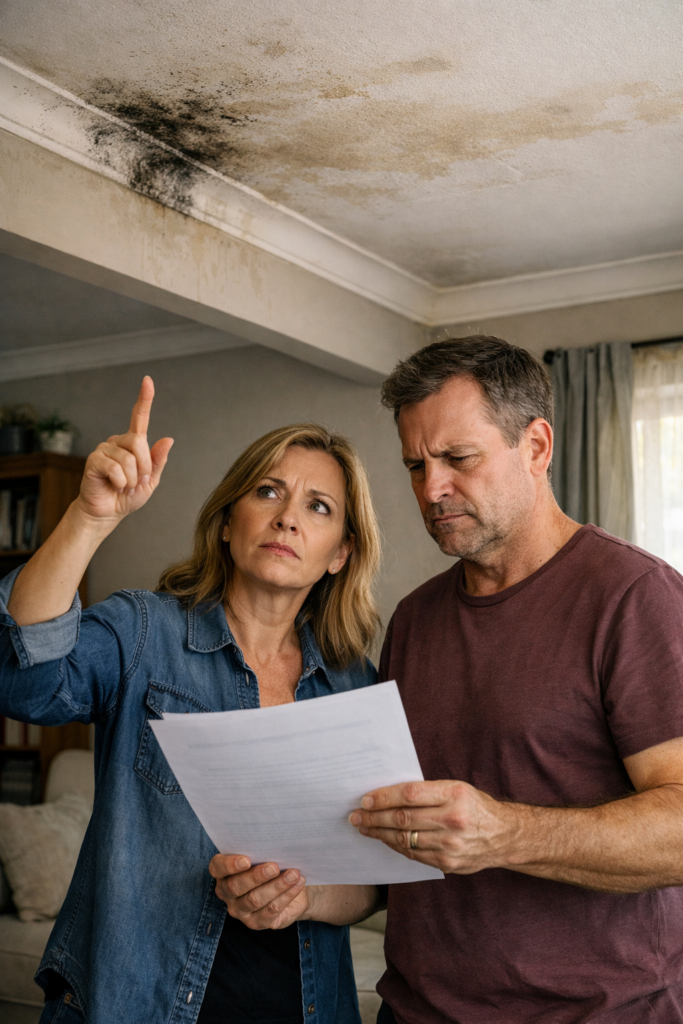
Match each disputed statement to a document, photograph or other record.
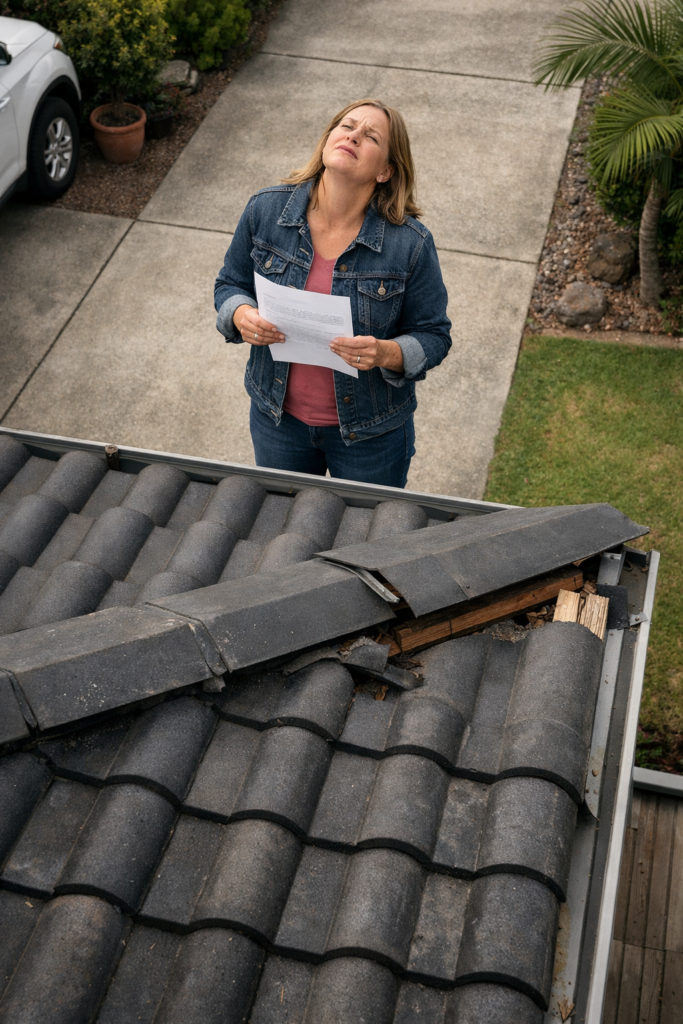
Review the inspected areas, supporting records and limits of the assessment.
An insurance assessor’s report should be read alongside the limits of the inspection. What was inspected? What could not be accessed? Which documents and photographs were available?
A report may record no damage in an area that was not inspected. Or the insurer may treat a limited inspection as evidence about the whole property. We check whether the conclusion goes beyond what the report actually establishes.
Our review considers:
Further testing is not necessary in every claim. The question is whether the evidence available supports the conclusion being used to decide yours.
“Maintenance” describes an issue. It does not, by itself, explain the cause of every area of damage or how the policy applies.
If an insurance claim was rejected based on a report, we examine the link between the observations, the stated cause and the insurer’s decision. Has the report considered the event you claimed for? Does it address evidence that points to another explanation?
For example, a report might identify an older roof defect. The dispute may still require an explanation of how that defect, a recent storm and the resulting internal damage relate to each other. Finding a defect does not answer every question about the loss.
For mould-related disputes, relevant questions may include the moisture source, the inspection dates, drying records and the basis for any conclusion about duration. Claimboost can review the reasoning; a qualified hygienist or building specialist may need to answer the technical question.
An unfavourable opinion is not automatically an error. We focus on whether it is supported and whether the insurer has applied it appropriately to the claim.
Check the cause, conflicting evidence and policy position together.
Tell us which finding you dispute and why. We will take an initial look at whether the issue may affect your claim and whether Claimboost can assist.
Check the incident date, location, affected areas, measurements and account of what happened.
Look for the photographs, records, observations and tests supporting the findings.
Check whether inaccessible areas or missing information restrict what the report can establish.
Look for a response to earlier reports or documents that support a different conclusion.
Compare the report’s actual findings with the reasons in the decision letter or proposed scope.

Include the decision letter, scope or settlement offer that relies on it. Tell us the claim’s current stage and whether a complaint or AFCA process has started.
Point us to the relevant pages. Send photographs, dates, invoices or other reports that explain your concern. Keep original documents unchanged.
We assess whether the issue appears material, what evidence may be needed and whether the claim is suitable for advocacy.
If we propose further work, we explain our role and fees first. If engaged, we present the disputed points to the insurer and follow up its response.
The report uses the wrong incident date.
A damaged room is not recorded.
The report says no repairs were completed.
A cause is stated without an explanation.
Your independent report reaches another conclusion.
The report identifies uncertainty.
The scope excludes damage shown in the report.
The report was corrected but the offer stayed the same.
We consider the report, disputed finding and written outcome to assess whether Claimboost may be able to assist.
We check whether the insurer’s reasons accurately reflect what the report says, including its qualifications and limits.
We compare disputed facts with the available records and identify why a correction may matter to the claim.
We identify the specific points of disagreement between reports, photographs, claim records and the insurer’s explanation.
For claims we accept, we organise the issues, submit supporting evidence and seek a response to the disputed findings.
Where appropriate, we help prepare unresolved report issues and supporting documents for internal complaints or AFCA.

After months feeling lost in the maze of call centres and assessors, ClaimBoost has been a true lifesaver.
Deep expertise and clear guidance at every step, removing the stress that usually comes with insurance disputes.
Very helpful and knowledgeable in the complexities of insurance. I would recommend ClaimBoost.
Claimboost reviews claim documents by phone and online for policyholders across Australia. We consider suitable home, contents, strata, landlord, motor and business insurance disputes.
The report might come from a builder, assessor, engineer, hygienist, leak-detection specialist or another expert. Our role is to review how the evidence supports the insurer’s position and challenge material issues on claims we take on.

You can submit a disputed report used in a claim involving an insurer or insurance brand such as:
Send the report itself, rather than only the insurer’s summary. Include the attachments you have and the decision or offer that relies on it. We confirm whether we can assist after reviewing the circumstances and evidence.
Claimboost is independent of these insurers and brands. Names are included for identification only, without implying affiliation, endorsement or that a particular insurer’s reports contain errors.
Identify the statement, give its page number and explain what should be corrected. Attach the evidence and explain how the error affects the decision, repair scope or settlement. Put this to the insurer in writing and ask for a response to each point.
For example: “The report says the leak was first reported in March. The attached email records it in January. Please review the conclusion about the reporting delay using the correct date.”
Ask the insurer in writing for the report it relied on, including relevant attachments and any later amendments. Name the author or inspection date if you know them.
Where the General Insurance Code of Practice applies, it provides for access to information relied on in handling a claim, including relevant expert reports, subject to exceptions. If material is withheld, ask for the reason and how to raise a complaint. See Part 12 of the Code.
Yes, you can raise concerns about an insurance engineer report or building assessment. Separate facts you can demonstrate from technical conclusions that may require expert evidence.
A dated invoice may correct a statement about previous work. Disputing a structural explanation may need an appropriately qualified engineer. Claimboost can review the disputed reasoning and how the insurer has used it, but does not issue a replacement engineering opinion.
Not necessarily. Send the material you already have. A factual error may be addressed with existing records; a technical disagreement may require further investigation.
Before commissioning another report, identify the question it needs to answer and the expertise required. Claimboost’s claims advocacy review is separate from a technical inspection or report, which may involve an additional cost. We do not promise that the insurer will reimburse that cost.
Check what condition was observed, how it is said to have caused the damage and which policy wording the insurer relies on. Then identify any evidence that challenges that explanation.
A maintenance issue and an insured event may both need consideration. Neither the existence of a defect nor the timing of an event settles the whole claim by itself. We review the reasoning and whether relevant contrary evidence has been addressed.
Potentially. Send the hygienist or building report, the insurer’s position and any moisture readings, drying records, photographs or earlier assessments you have.
We examine the evidence used to describe the cause, duration and extent of the problem. Technical questions about contamination or remediation may need a qualified hygienist or another relevant specialist. Our review does not establish whether a building is safe to occupy or whether mould damage is covered.
Ask which findings it accepts, which it disputes and why. Reference the relevant pages and attach the report again if needed. Two different conclusions need to be compared through their evidence, methods and assumptions.
If the response does not address the disagreement, a written complaint can identify the unanswered points. An independently commissioned report does not automatically take priority over another report; its relevance and supporting evidence matter.
A dispute may be suitable for AFCA where a report has affected the insurer’s handling or decision on your claim. Raise the issue with the insurer first. AFCA’s eligibility rules and time limits apply.
You can complain directly without paying an advocate. Claimboost may assist with presenting a suitable unresolved dispute if engaged. Moneysmart explains the insurer complaint and free external dispute resolution process.
You can submit them for an initial review. Include the report, insurer’s written decision or offer, and evidence explaining the disputed findings.
Suitability depends on the issue and the claim’s position, not just the insurer’s name. We act independently for policyholders on claims we accept and do not assume a report is incorrect because an insurer appointed its author.
The initial review is free and no obligation. Any further advocacy service and fees are explained before you decide whether to proceed.
A correction may affect the insurer’s reasoning, but it does not guarantee a different decision or higher settlement. We assess whether the issue matters to the claim. Outcomes depend on the evidence, circumstances and policy wording.
Show us the report, explain what does not match your records and send the insurer’s written position. We will take an initial look and tell you whether Claimboost may be able to help.
Useful documents to have ready:
The initial review is free and no obligation. Further services and fees are agreed separately. Claimboost provides independent insurance claims advocacy, not legal advice or a technical building assessment. Claim outcomes depend on the circumstances, evidence and policy wording.
Select an available appointment below. If you do not have the full report yet, tell us what you have received.