

Mould Damage Claim Declined, Delayed Or Underpaid?
If your mould claim has been declined, delayed, or underpaid, Claimboost can review the dispute and help you understand whether there may be a path forward.
My Mould Claim Was Rejected
Your insurer may be blaming wear and tear, poor maintenance, pre-existing damage, ventilation issues or a policy exclusion.
My insurer is taking too long
Your insurer may be waiting on reports, delaying remediation, failing to act quickly or allowing the mould damage to get worse.
The offer is too low
The settlement or scope of works may not cover mould remediation, hidden damage, repairs or the real cost to restore the property.
- Free initial review
- Independent of insurers
- We tell you upfront if we can't help
What Claimboost Reviews
Two sides of every mould claim dispute: the decision and the evidence
The Insurer's Decision
We review the insurer’s decision, delay or settlement offer against your policy, claim history and the evidence they relied on. Mould claims are often declined or limited because of wear and tear, maintenance, pre-existing damage, poor ventilation or exclusions, but those reasons should be supported by the facts.
The Reports Behind It
Mould claims often rely on hygienist reports, builder reports, leak detection reports, moisture readings and repair scopes. We check whether those reports properly explain the cause, timing, spread and extent of mould damage, or whether they rely on assumptions, gaps or unsupported conclusions.
How Claimboost Helps
Insurance claim advocacy for complex mould damage disputes
Free 30-minute claim consultation
A no-cost first look at your mould damage claim, the insurer’s position and whether Claimboost may be able to help.
Claim File Review
We review the claim file, policy wording, insurer reports, correspondence, scopes, quotes and settlement offer to understand what the decision or offer is based on.
Decline Letter Review
If your mould claim has been rejected, we check the insurer’s reasons, the exclusions relied on and whether the evidence appears to support the decision.
Claim Advocacy & Negotiation
We advocate on your behalf, deal with the insurer directly and raise clear, evidence-based questions about weak reasoning, incomplete scopes, low offers and unreasonable delays.
Independent Expert Evidence
Where needed, we help identify the independent evidence required to test the insurer’s position, including hygienist, builder, leak detection or other expert reporting.
AFCA Complaint Support
If the insurer will not resolve the dispute through its internal process, we can help prepare and support your complaint through the Australian Financial Complaints Authority.

What happens next
After you contact us
No commitment until you have had our honest first view on your mould damage claim.
-
1. Book a free 30-minute claim consultation
-
2. Share with us evidence related to your claim
-
3. Meet with us to discuss your options
-
4. You decide whether you want to work with us
What changes when we step in
From managing the mould claim alone to having an advocate in your corner
Chasing the insurer for updates while mould damage continues to affect your property
- We deal with the insurer directly and push for clear progress in writing
Trying to challenge hygienist, builder or assessor reports on your own
- We review the evidence, identify gaps and help build a stronger position
Being told the mould is wear and tear, maintenance or pre-existing damage
- We test the insurer’s reasoning against the policy, reports and claim history
Unsure whether the settlement will actually cover remediation and repairs
- We review the scope, offer and repair costs to see whether the outcome appears properly supported
Facing complaints or AFCA without knowing what evidence matters
- We help prepare the complaint with the arguments and evidence most likely to matter
Is This You?
Signs your mould damage claim deserves a second look
If even one of these sounds familiar, it’s worth a free 30-minute claim consultation.
You do not need to be certain your insurer got it wrong. That is our job. Send us your mould damage claim details and we will take an honest first look at no cost.
Common signs of an unfair outcome
- Your mould damage claim was declined for wear and tear, maintenance, poor ventilation or a policy exclusion.
- Your insurer says the mould was pre-existing or not caused by the insured event.
- Your insurer relied on a hygienist, builder or assessor report that seems incomplete or incorrect.
- The insurer delayed drying, make-safe works or remediation and the mould has worsened.
- The cash settlement offer seems too low to properly remediate the mould and repair the damage.
- The scope of works does not include proper mould remediation or all affected areas.
- Your insurer keeps delaying, going quiet or asking for more evidence without clear progress.
- You feel like you are managing the claim yourself while the damage continues to affect your property.
Does Your Home Insurance Cover Mould Damage?
Mould damage may be covered when it results from an event covered by your policy. The answer depends on the source of the moisture, the circumstances of the damage and the policy’s terms and exclusions.
Mould following a storm or burst pipe needs to be assessed in connection with that event. Ongoing dampness, condensation, ventilation problems or gradual leaks may raise different coverage issues. Finding mould after water damage does not, by itself, establish that it is covered.
If your insurer attributes the mould to maintenance or pre-existing damage, ask which policy wording and evidence support that conclusion. The assessment should explain the cause and address relevant photographs, inspection findings and claim records including evidence that may contradict the insurer’s position.
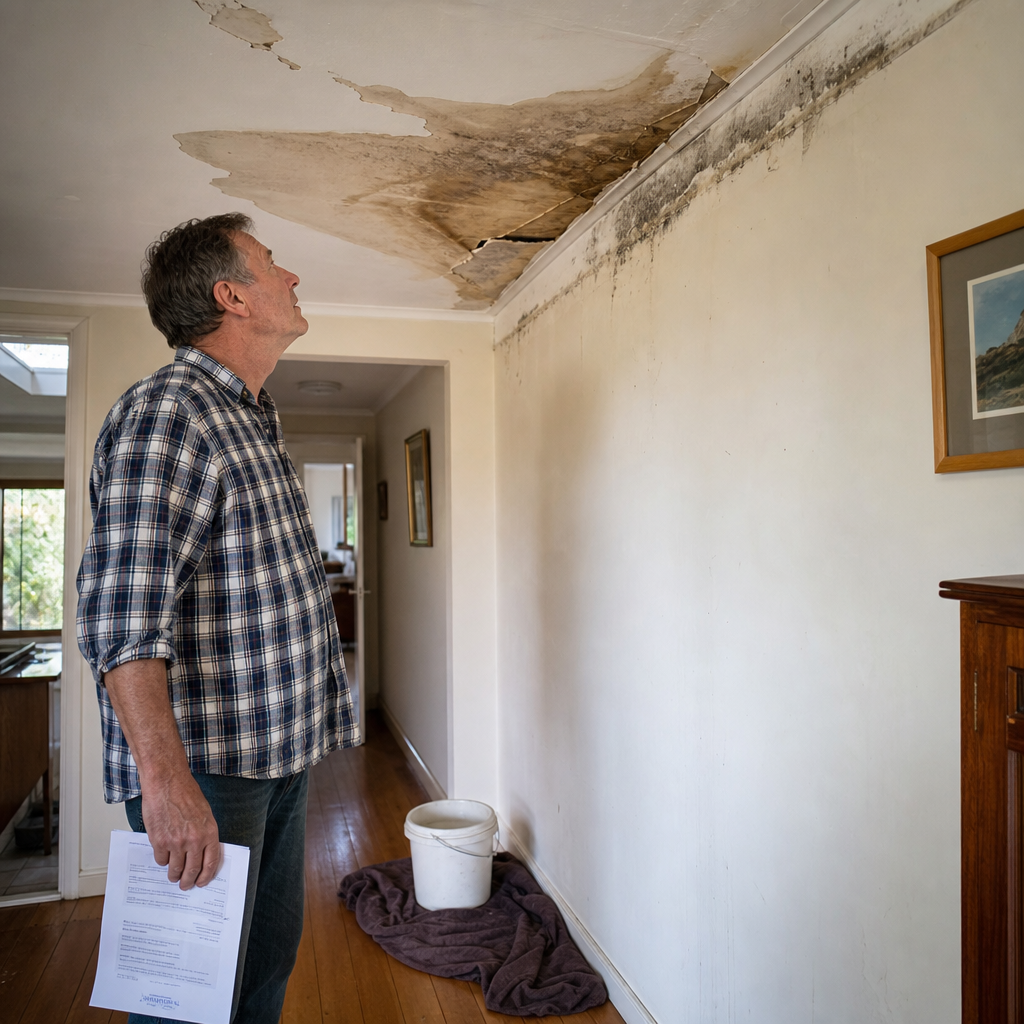
Situations when Mould Insurance Claims
Each situation needs to be assessed on its facts. If mould appeared or spread while the claim was being assessed, notification dates, drying records and inspection reports may help establish whether delays contributed to further damage.
Claimboost can review the insurer’s written position and available evidence before confirming whether we can assist with your mould insurance dispute.
Evidence That Can Change A Mould Claim
Mould damage disputes often come down to the reports, records and timelines behind the insurer’s decision. If the evidence is incomplete, unclear or based on assumptions, the outcome may not reflect the true cause, spread or cost of the damage.
Claimboost reviews the evidence behind your mould claim to identify what may have been missed, misread or unfairly relied on.
- Hygienist reports can help show the presence, spread and severity of mould
- Moisture readings can help confirm where water has travelled.
- Leak detection reports can identify the source of water damage.
- Builder reports can support the repair method and scope required.
- Photos and timelines can show whether delays made the damage worse.
- Scopes and repair quotes can show whether the insurer’s offer is realistic.
- Insurer correspondence can reveal delays, changed positions or gaps in claim handling.
- Make-safe and drying records can show whether early action was taken.
Not Sure If Your Mould Claim Is Worth Reviewing?
Tell us what has happened with your mould damage claim and we will let you know if Claimboost may be able to help. If the insurer’s decision, delay or offer appears reasonably supported, we will say so. If there may be a path forward, we will explain your options clearly.
UNDERSTANDING YOUR MOULD INSURANCE CLAIM
What Caused the Mould and What Happens Afterwards?
A mould insurance dispute needs a clear account of where the moisture came from, when the damage appeared and what action followed. The timeline matters, but timing alone does not establish the cause.
Claimboost reviews these details alongside the insurer’s reports and your policy to identify what needs questioning or further investigation.
Where Did the Water Come From?
Was there a storm, roof leak, burst pipe, failed waterproofing or another moisture source? Check whether the inspection identified where water entered and explained the connection to the mould, rather than simply labelling it a maintenance issue.When Was the Damage First Found?
Record the event date, when you first noticed moisture or mould, and when you notified the insurer. Dated photographs, earlier inspections and maintenance records can help test claims that the damage was already present.What Was Done to Stop Further Damage?
Check when the moisture source was addressed and what make-safe, drying or removal work occurred. Correspondence, invoices and drying records can help establish what was done, what remained unresolved and whether further investigation is needed.Were All Affected Areas Investigated?
Compare the areas you reported with those inspected. If water may have reached adjoining rooms, wall cavities or ceiling spaces, check whether the reports investigated those areas or explained why they were excluded.WHERE IS YOUR MOULD CLAIM STUCK?
Get support for your specific situation
Mould Claim Declined
Your insurer has rejected your mould claim, possibly blaming wear and tear, poor maintenance, pre-existing damage, ventilation issues or a policy exclusion.
Mould Claim Delayed
Your insurer is taking too long, waiting on reports, delaying remediation, going quiet or letting the mould damage get worse with no clear decision.
Mould Claim Underpaid
The cash settlement, repair quote or scope of works does not seem enough to properly remediate the mould and repair the affected property.
AFCA Complaints
You have hit a wall with the insurer’s internal dispute process and need help preparing or strengthening your AFCA complaint.
AUSTRALIA-WIDE CLAIM ADVOCACY
Independent Insurance Claim Advocates Across Australia
Claimboost helps policyholders across Australia with disputed, declined, delayed and underpaid insurance claims. We review the insurer’s decision, reports and settlement offer to identify what needs questioning and whether further evidence is required.
Our service is delivered by phone and online, so you can access claim advocacy from a capital city, regional town or remote community.

Mould damage claim support questions
Possibly. Insurers often rely on wear and tear, maintenance, poor ventilation or pre-existing damage to reject or limit mould claims. The important question is whether their position is actually supported by the reports, photos, timeline, policy wording and cause of damage. If the decision relies on assumptions or incomplete evidence, it may be worth reviewing.
Delays can be important in mould damage disputes, especially if drying, make-safe work, inspections or remediation were not progressed quickly. We can review the timeline of the claim, what the insurer did or failed to do, and whether the delay may have contributed to the damage getting worse.
Yes. Mould claims often rely on expert reports, but those reports are not always complete or reliable. A report may miss affected areas, rely on assumptions, fail to explain the cause of mould clearly, or overlook evidence that supports your position. Claimboost can review the report and help identify whether it stands up to scrutiny.
This type of service is commonly called insurance claim advocacy or insurance claim dispute support. Claimboost acts as a claim advocate, helping you review the insurer’s decision, reports, scope of works or settlement offer and work out whether there is a fair basis to challenge it.
Yes. If Claimboost takes on your claim, we can deal with the insurer directly on your behalf. We keep you informed and bring key decisions or offers back to you, but we help reduce the back-and-forth of managing the claim yourself.
If mould remediation is missing from the scope of works, the settlement or repair plan may not properly address the damage. This can be a serious issue if the property cannot be safely or properly repaired without treating the mould first. We can review the scope, reports and offer to see whether key items appear to be missing.
Yes. If the insurer has accepted the claim but the cash settlement or repair quote does not seem enough to fix the mould damage properly, we can review the offer, scope of works, expert reports and policy benefits to see whether the outcome appears fair.
Insurers can ask for relevant evidence, but repeated requests with no clear progress can become frustrating and may delay the claim unnecessarily. We can look at what they are asking for, why they say they need it, and whether the claim appears to be stuck without a clear reason.
A claim advocate helps you deal with the insurer when your claim has become difficult, delayed, declined or underpaid. Claimboost reviews the claim documents, checks the insurer’s reasoning, identifies issues with the evidence and can deal with the insurer on your behalf to help push the claim towards a fairer outcome.
If your mould damage insurance claim has been declined, delayed, underpaid or mishandled, start with a free review and get a clearer view of whether Claimboost may be able to help.